Writers Have a Way To Collect: How Timelines Unlock and Honor Students’ Stories
Reading time
Date posted
By Jen Vincent
Being a writer means putting pen to paper or fingers to keys and adding words to the page. But before a writer can start, they need an idea, something to write about.
This is why having a way to collect is the first practice in Living the Life of a Writer: 6 Practices Student Writers Have, Know, and Do. I love collecting ideas in a physical writer’s notebook but I also take pictures on my phone, add ideas to my Notes app, and record voice memos. Starting by having a way to collect invites students right into living the life of a writer. At the beginning of the school year, my students design notebook covers and we use these notebooks throughout the year to collect ideas and explore them.
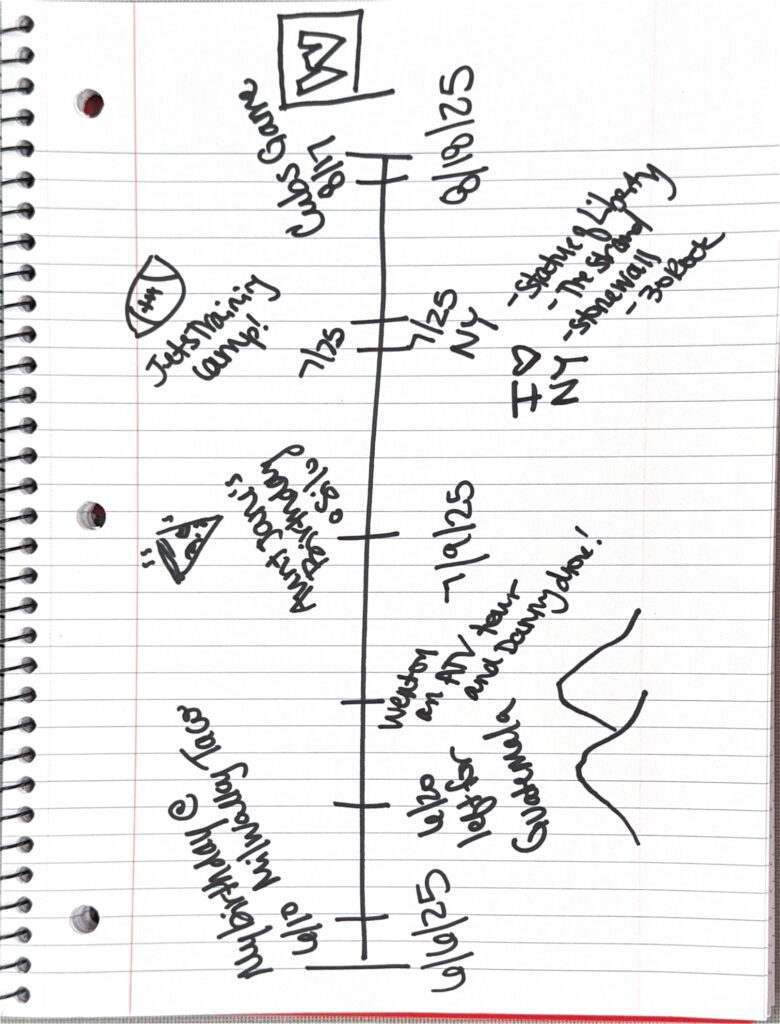
With their notebooks ready, they can now start to collect ideas. One of my favorite ways to collect ideas is to use a timeline. Students open to a new page in their notebooks, turn it sideways, and draw a horizontal line from left to right, instantly giving them a timeline that they can add ideas to.
At the beginning of the school year, I asked students to create a timeline of their summer. We labeled the first date on the left with June 6th, 2025, the day after the last day of school. And then we labeled the date on the far right with August 18th, 2025, the day before the first day of school. From there, they spent a few minutes adding moments from the summer to their timeline.
“What if I don’t remember the exact date?” a student writer asked.
”No problem!” I told them. “Just try and put your moments in order as best you can.”
All students, regardless of how they spent the summer, added moments to their timeline. This was a great back-to-school activity but also a perfect way to start collecting ideas. We’ll try other strategies for collecting ideas and add them to our notebooks too. At any time, if a student isn’t sure what to write about, I’ll direct them back to their notebooks and the ideas they’ve collected there.
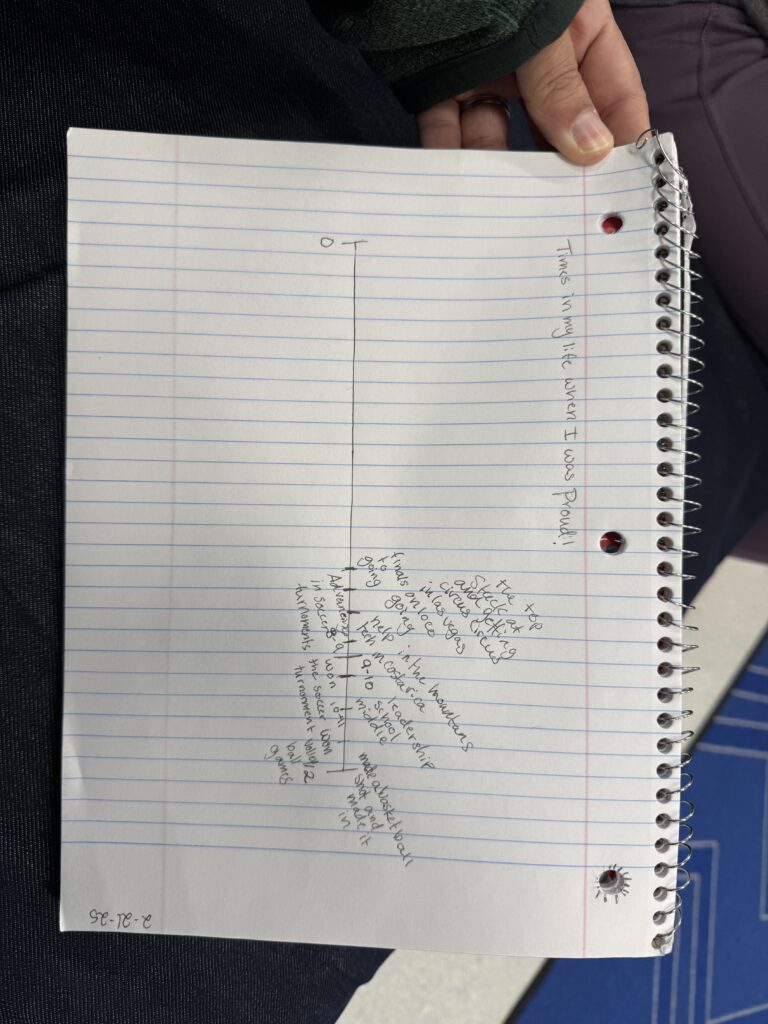
Once students realize the power of a timeline, they can use timelines as a versatile strategy they can come back to again and again. For example, students can create timelines and then write about individual moments in their lives when they felt a certain way — times when they felt proud, times when they felt nervous, times when they felt excited.
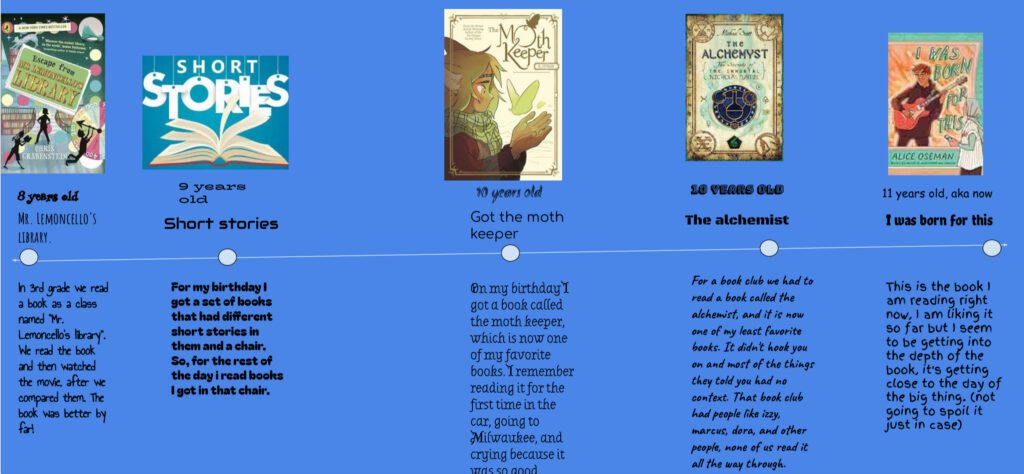
They can fill a timeline with memories from their childhood, memories related to a place, memories from a school year, moments from research, moments from a book they are reading. Timelines allow student writers to gather up ideas in an organized way.
The beauty of a timeline — beyond being easy and versatile — is that everyone has lived experiences and this highlights that. It’s not about deciding which stories are worth telling or which are the best or the worst or the favorite. Instead, it’s simply about putting memories on the timeline without judgement. As a community of writers, we can share moments on our timelines and doing so often inspires other student writers to add moments to their timeline.
If you’d like to learn more about how to take an inquiry-based approach to teaching writing that centers student writers and grows their confidence and curiosity, check out Living the Life of a Writer: 6 Practices Student Writers Have, Know, and Do. In addition to having a way to collect ideas, I share how writers have a writer’s mindset, that they know writing is a process and know strategies to help themselves, and that they explore and celebrate. Because, yes, being a writer means putting pen to paper or fingers to keys and adding words to the page. But when we invite students into living the life of a writer using these 6 practices as a framework, we empower them to see that their stories, and how they tell them, matter.
About the Author

Jen Vincent celebrates the human experience through writing. With extensive experience in special education, curriculum development, instructional technology integration, teacher coaching, and working with multilingual learners, she currently serves as a sixth–eighth-grade Middle School Language Arts Teacher.
Vincent is the founder of Story Exploratory, where she offers workshops, coaching, and professional development to help writers explore what it means to live the life of a writer. Learn more at storyexploratory.com and at @storyexploratory on Instagram.

Living the Life of a Writer
Living the Life of a Writer: 6 Practices Student Writers Have, Know, and Do
Living the Life of a Writer shifts the focus of writing instruction from the writing to the writer—guiding teachers so they can help students boldly face the blank page and move through their writing process with enthusiasm.
Guiding you through 6 habits of living the life of a writer, Vincent explores writing instruction as a classroom culture of writing where teachers and students alike approach writing with confidence and curiosity, thinking deeply about the habits they develop and choices they make as writers.