When Friendship Doesn’t Come Easy and Other Lessons in Community
Reading time
Date posted
By Mari Dean, author of Lessons in Community: A Teacher’s Guide to Reimagining Classroom Management and Social-Emotional Learning
Some kids (and adults!) seem to make new friends effortlessly. They sashay into the classroom on the first day, strike up a conversation with another kid at their table, and are best friends by lunchtime. For other kids, the process of making new friends moves a little slower. Learning to make friends and nurture our friendships is a lifelong skill, and providing kids with support as they navigate friendship at school is a worthy goal.
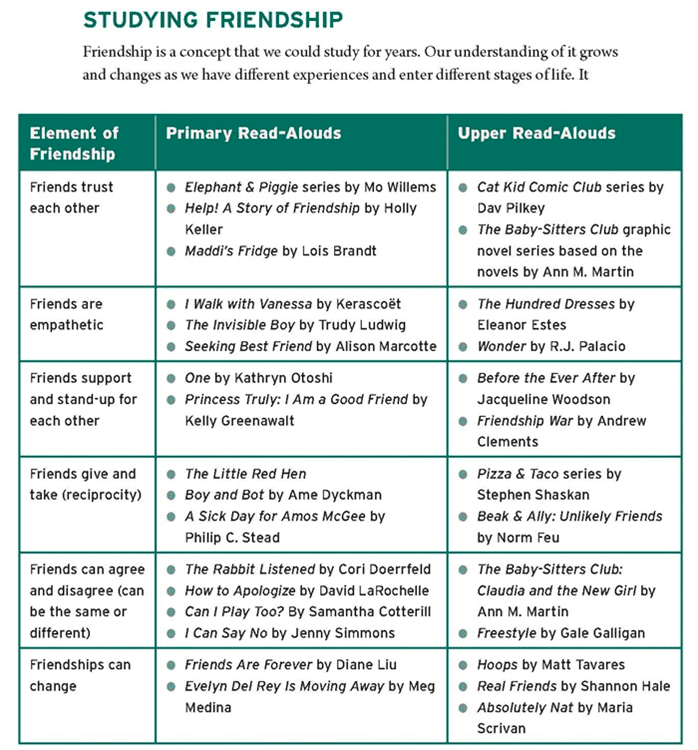
So how do we do this? We might consider integrating a study of friends and friendship into our literacy work and read-alouds. It can be helpful to spend time as a class thinking about and developing a common language of what friendship means to us. This study of friendship can provide a great base for teaching some of the lessons and strategies in the Friendship chapter of Lessons in Community.
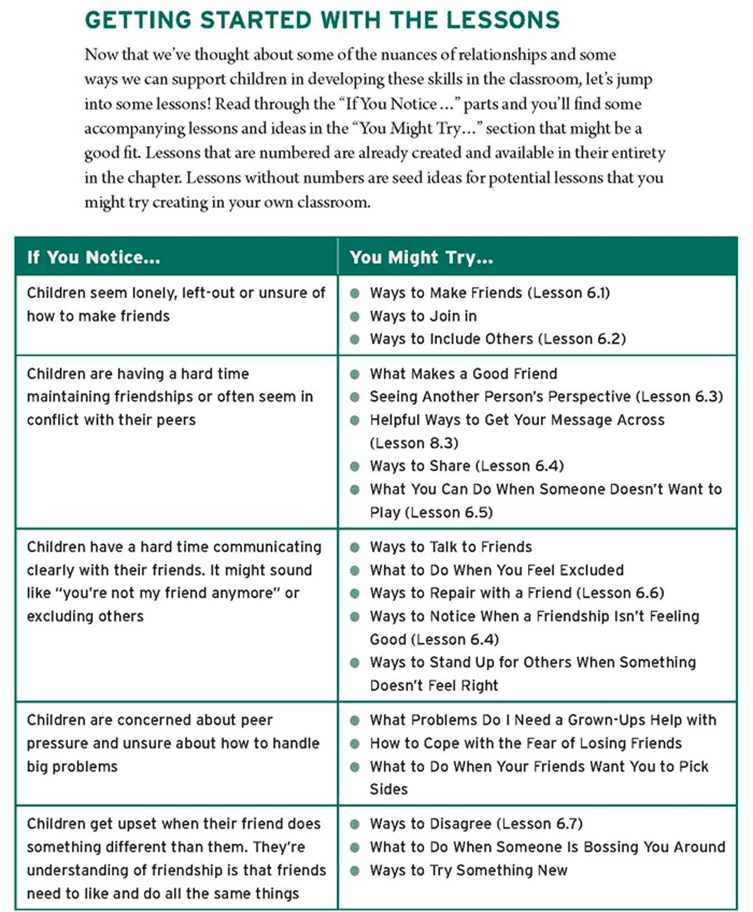
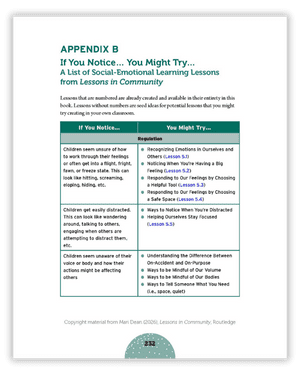
Next, we, as teachers, can take a moment to reflect on what we’re noticing about students’ relationships with one another in the classroom. What feels strong right now? What feels challenging? To support students in learning new relationship skills and give them opportunities to practice these skills, we might choose a strategy lesson such as the ones in this chart.
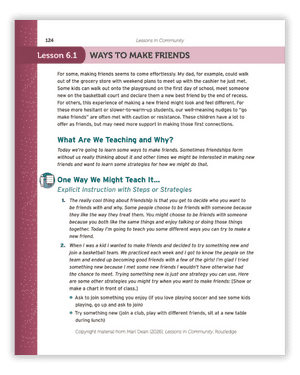
If we notice students may need some “getting started” support in forming new friendships, we might teach Lesson 6.1 Ways to Make Friends. In this lesson, students and the teacher brainstorm and chart strategies for making new connections and engage in a friendship-focused read-aloud of You Will Be My Friend by Peter Brown. Later students make a quick plan to put their strategies into action.
How Do the Strategy Lessons Work?
If we want kids to really take on new social learning, we need to embed ample opportunities for practice and transfer with support. With this rationale in mind, each lesson has three main components for teaching: how we might teach the strategy, practice the strategy, and support students with transfer. These components include a wide variety of teaching methods like class conversations, explicit strategy charts, interactive read-alouds, social stories, role play and others. The sample lessons illustrate one way you might teach the strategies, but I encourage you to innovate and adapt in ways that are responsive to the children in front of you. As you become familiar with the various teaching methods within these lessons, reflect on which ones match your purpose and use them flexibly. The “If You Notice, You Might Try…” chart (Appendix B) can support you in choosing strategy lessons from the book or creating your own.
More About Lessons in Community
Building an engaging and thriving classroom community is the goal of every teacher. But while conventional classroom management relies on rewards and punishments to create a culture of compliance, teachers know that classroom communities and children deserve more and better. In Lessons in Community: A Teacher’s Guide to Reimagining Classroom Management and Social-Emotional Learning, elementary school teacher Mari Dean shares an asset-based and step-by-step process for reimagining classroom management and social-emotional learning. Whether it’s helping students navigate friendship issues, identify their own emotions and learn tools and strategies to regulate, advocate for themselves, or problem solve the day-to-day issues of classroom life, Lessons in Community provides strategies, lessons and stories to get you started or help you take the next step in your journey.
Be sure to check out a free preview of the book, along with three free lesson downloads from the book: Lesson 5.3 Responding to our Feelings by Choosing a Helpful Tool, Lesson 6.1 Ways to Make Friends and Lesson 7.2 Noticing Problems and Using Strategies to Solve Them.

Lessons in Community: A Teacher’s Guide to Reimagining Classroom Management and Social-Emotional Learning
Grounded in the pursuit of humanizing schools and classrooms where children experience agency and joy, Mari Dean examines both the classroom management practices we must disrupt and those we must work towards to create these places in our own classrooms.
About the author

Mari Dean is an elementary school teacher in Northern Virginia.
She has a passion for teaching social-emotional skills to children and helping schools reimagine systems where all kids experience agency, joy, and a deep sense of belonging.