Black History Month in the United States: Progress, Power, and the Ongoing Struggle for Justice
Reading time
Date posted
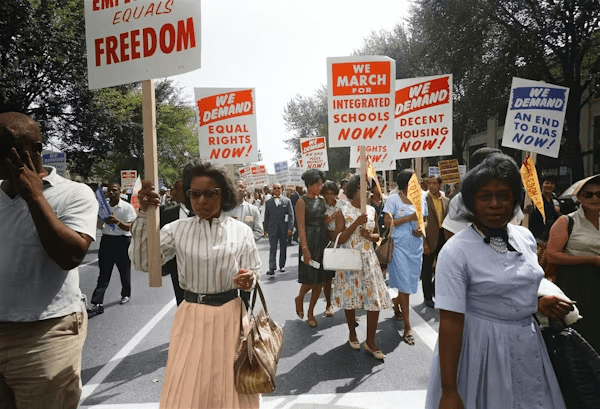
What Is Black History Month in the United States?
Black History Month, observed each February in the United States, is a time to honour the achievements, resilience, and cultural contributions of African Americans.
Established to recognise histories too often excluded from mainstream narratives, it highlights:
The Civil Rights Movement
Black intellectual and artistic traditions
Political leadership and activism
Community resilience and innovation
Yet Black History Month is not only retrospective. It is also a moment to reflect on the present — to assess how far the United States has progressed, and where structural inequities remain.


How Has the United States Progressed Since the Civil Rights Era?
Over the past decades, significant progress has been made:
The dismantling of legal segregation
Expanded voting protections (though contested)
Increased representation in politics, academia, and media
Broader public recognition of systemic racism
Landmark moments — from the passage of the Civil Rights Act to the establishment of institutions like the National Museum of African American History and Culture — reflect hard-won victories.
However, legal reform does not automatically dismantle structural inequality. Disparities in wealth, health outcomes, housing, policing, and incarceration persist.
This dual reality — progress and persistence — defines contemporary conversations during Black History Month.
What Is “Racial Capitalism” and Why Does It Matter Today?
Laundering Black Rage provides a critical framework for understanding how racial inequality continues to operate within modern systems of power.
The book examines how racial violence and economic exploitation are often obscured — “laundered” — through institutional processes that transform harm into profit, property, or legitimacy.
Key themes include:
The relationship between race and property
The commodification of Black suffering
The transformation of racial violence into economic gain
The systemic nature of inequality
By analysing how Black death, dispossession, and resistance are processed within legal and economic systems, the book invites readers to consider how historical patterns shape contemporary realities. Importantly, Chapter Six is available as an Open Access PDF under a Creative Commons (CC BY-NC-ND 4.0) license, making this scholarship widely accessible for educational and non-commercial use.
Why Do These Issues Remain Relevant in the Current Landscape?
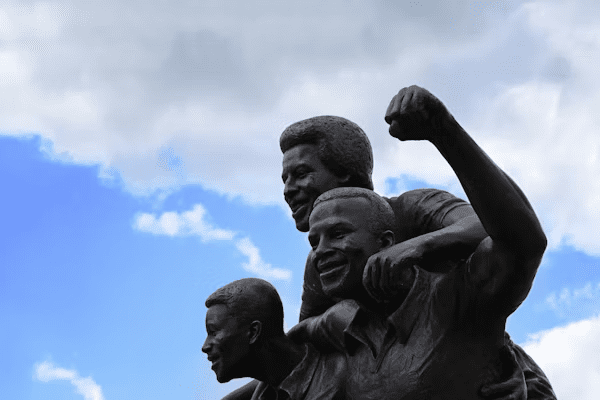
Recent years have seen renewed national conversations about:
> Policing and accountability
> Mass incarceration
> Housing inequality
> Wealth disparities
> Voter access
While public awareness has increased, structural disparities remain embedded in institutions. Black History Month therefore functions not only as celebration, but as civic reflection. Scholarly work plays a vital role in this process. It provides language, historical grounding, and analytical clarity — tools necessary for informed public discourse.
What Role Does Scholarship Play During Black History Month?
Black History Month is often marked by storytelling and commemoration. Scholarship adds another essential layer: structural analysis.
By interrogating how systems transform racial harm into economic and political advantage, Laundering Black Rage encourages readers to move beyond individual incidents toward systemic understanding.
This perspective does not negate progress. Rather, it situates progress within a broader landscape where inequality adapts and persists.
Acknowledging both achievement and ongoing injustice reflects the complexity of American history — and the responsibility of academic inquiry.
Accessing the Open Chapter
Chapter Six of Laundering Black Rage is freely available as a downloadable Open Access PDF via Taylor & Francis under a Creative Commons Attribution–Non Commercial–No Derivatives (CC BY-NC-ND 4.0) International license.
This allows:
Free access for readers
Educational use
Non-commercial distribution
No modification of the original text
Open scholarship ensures that critical conversations extend beyond the academy.
Why Black History Month Still Matters
Black History Month remains vital because history is not static. The legacies of slavery, segregation, redlining, and racial violence continue to shape economic and social realities.
Recognising progress is necessary. So too is confronting unfinished work.
Through rigorous scholarship and open access research, deeper understanding becomes possible — not only during February, but throughout the year.