Jungian Archetypes Defined: In Simple Terms
Reading time
Date posted
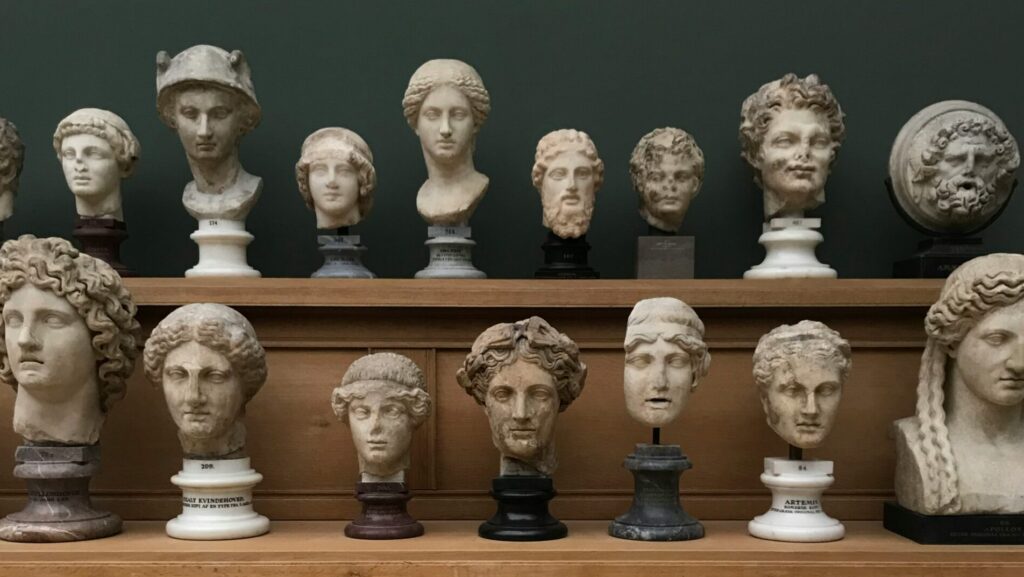
Have you ever noticed how certain stories, characters, or symbols feel familiar, no matter where they come from? This is essentially the idea behind Jungian archetypes; they’re universal patterns that influence how we think, feel, and relate to the world. While the concept can seem complicated at first, it’s actually rooted in everyday ideas like the Hero, the Mother, or the Trickster. In this blog post, we’ll explain these concepts in straightforward terms and explore how their significance.
“Archetypes are not simply intellectual concepts but are imbued with feeling, which gives them their power to affect us in a most visceral fashion. You know when you are gripped by an archetype, such as falling in love. Or when you are possessed by the ‘witch’; or the ‘hero’. They have characteristics with which we may be familiar and encountering them in their archetypal form increases their impact significantly because archetypes are numinous (which means they are possessed of a spiritual quality/energy which increases their force and may be felt as overwhelming).”
– Williams, Ruth. (2019). C. G. Jung: The Basics. Routledge, Taylor & Francis.
The meaning of ‘archetype’
An archetype is a universal pattern or template in human experience, encompassing events, characters, symbols, or motifs that evoke shared understanding and emotion. The term originates from the Greek words arche (origin or beginning) and typos (model or pattern), essentially meaning “original pattern”, as in a universal model or template.
Jungian archetypes are like universal patterns or “blueprints” that exist in everyone’s mind. They shape how we think, feel, and act. For example, we all understand what a “Hero” or “Mother” is because these ideas are (arguably) built into us, not just learned. Archetypes show up in stories, dreams, and symbols, like a heart for love or a circle for unity. They are shared by all humans, no matter where or when they live, and help us make sense of life.
Examples of Jungian archetypes
Jungian archetypes can manifest in myths, stories, dreams, and cultural narratives across time and geography. Below are some common Jungian archetypes, along with brief descriptions.
The Hero: Represents courage, determination, and the will to overcome challenges. The Hero embarks on a journey or quest, often facing trials and adversaries to achieve a goal or bring about transformation.
The Shadow: Symbolises the darker, unconscious aspects of the psyche, including repressed desires, fears, and weaknesses. It often represents the “other” or the antagonist in stories.
The Anima/Animus: Represents the feminine aspect within the male psyche (Anima) and the masculine aspect within the female psyche (Animus). Though critics today highlight how this can reinforce rigid gender binaries that many view as outdated.
The Wise Old Man/Woman: Embodies wisdom, guidance, and mentorship. This archetype often provides the Hero with knowledge or tools to succeed in their journey.
The Trickster: Represents mischief, chaos, and the breaking of conventional rules. The Trickster often challenges norms and brings about change through disruption.
The Mother: Symbolises nurturing, care, and creation. This archetype can appear as a positive, life-giving force or as a devouring, overbearing figure.
The Child: Represents innocence, potential, and new beginnings. The Child often symbolises hope and renewal but may also embody vulnerability.
The Lover: Embodies passion, desire, and connection. The Lover seeks harmony and unity, often driven by emotion and beauty.
The Ruler: Represents authority, control, and order. The Ruler seeks to create stability and structure but may also become tyrannical.
The Caregiver: Symbolises compassion, selflessness, and the desire to protect and help others. The Caregiver often sacrifices their own needs for the well-being of others.
The Explorer: Represents the drive for discovery, adventure, and freedom. The Explorer seeks to push boundaries and find new experiences.
The Rebel: Challenges authority, breaks rules, and seeks to overthrow the status quo. The Rebel often fights for justice or personal freedom.
These archetypes are not rigid categories but rather fluid patterns that can overlap or combine within a single character or narrative. They serve as a framework for understanding human behaviour, storytelling, and the shared symbols that resonate across cultures. Jungian archetypes can also extend beyond character types and can manifest as symbols, motifs, or abstract concepts that represent universal themes or experiences.
Why are Jungian archetypes significant?
Jungian archetypes are significant because they provide a useful universal framework for understanding human behaviour and shared experiences. These archetypes, such as the Hero, the Shadow, and the Mother, reflect recurring patterns in how we think, feel, and act. By recognising these patterns, we can gain an insight into ourselves and others.
In storytelling, archetypes are the foundation of narratives that resonate across cultures and generations. They make stories relatable and emotionally impactful by tapping into common human experiences. Whether it’s the Hero’s journey in mythology or the Trickster’s chaos in modern films, these archetypes create a sense of familiarity and connection.
Beyond psychology and storytelling, archetypes have practical applications in fields like marketing, therapy, and the arts. Brands use archetypes to connect emotionally with audiences, while therapists help clients explore their unconscious through these patterns. Archetypes transcend time and culture, offering a lens to understand not only ourselves but also the collective human experience.
“An archetype provides underlying structure to experience but does not determine the specific presentation when it appears to consciousness as an image. Here, image is used loosely to describe a figure, process, object, or situation. In addition to the hero, other archetypal figures include father, mother, the ruler/leader/king/ queen, the victim, villain, trickster, magician/sage, priest/prophet, healer, mystic, acolyte/initiate, hunter, and so on. Any role/figure that has general universality across generations and cultures can potentially be an archetype, but how that archetype manifests in different eras and cultures will vary. Processes such as journey, ascent, or descent can be considered archetypal. Places can also be archetypal, such as boundaries, crossroads, places of refuge, places of initiation, bridges, or entrances, gates, and doorways.”
– Winborn, Mark. (2023). Jungian Psychoanalysis: A Contemporary Introduction. Routledge, Taylor & Francis.
Evolving perspectives and critiques
Jungian archetypes have faced criticism for reinforcing stereotypes, particularly in concepts like the Anima and Animus, which reflect traditional gender roles. Critics argue that these ideas can perpetuate outdated binaries, overlooking the fluidity and diversity of identity in modern society. Additionally, some question whether archetypes are truly universal, or if they are shaped by specific cultural contexts.
Despite these critiques, archetypes have evolved to reflect contemporary perspectives. Modern interpretations emphasise inclusivity and diversity, reimagining archetypes to account for broader human experiences. For instance, the Anima and Animus are increasingly seen as symbols of inner balance rather than fixed gender constructs. This adaptability helps ensure that Jungian archetypes remain relevant and meaningful in today’s world.
Further Learning

Browse our collection
For more on Carl Jung, look to our expansive collection of books.
