A Guide to Visible Learning and Resources
Reading time
Date posted

Adopting visible learning strategies in school settings can be a positive and effective way to increase student achievement. Read more about the research on visible learning, learn about teaching strategies for implementing visible learning in the classroom, and access helpful resources here.
What is Visible Learning?
According to professor John Hattie, a leading education researcher from Australia, visible learning is an evidence-based teaching approach grounded in decades of educational research and large-scale meta-analyses. At its core, John Hattie’s visible learning framework aims to make student learning as visible as possible.
This means that all learners should clearly understand their learning intentions and success criteria, so they can see how their efforts contribute to their education. At the same time, teachers reflect on their instructional practice to evaluate how it impacts student achievement.
Overall, the main message of visible learning is that teachers need to be evaluators of their impact. It recenters teachers’ perception — focusing less on transmission (how they’re teaching) and more on reception (how well students are learning). By doing this, visible learning creates a culture of clarity, feedback, and professional dialogue, where teachers use evidence to understand what works best in the classroom.
Watch the video below to learn more as professor John Hattie explains the three different areas of visible learning (research, school implantation and students) before exploring the importance of feedback. Then, if you’re ready to take the next step, download our free visible learning resource guide to fully understand how to implement this powerful teaching method in classrooms.
Visible Learning Benefits
The positive effects of visible learning can be seen across all levels of education, from kindergarten to college. It benefits students, teachers, and school leaders alike.
Students often experience increased motivation and a stronger desire to learn. They gain confidence as learners, which supports better academic performance across subjects. Through visible learning strategies, students develop deeper understanding, enabling them to apply knowledge in new contexts — a key goal of effective teaching practice.
In addition, making learning visible creates inclusive classroom environments where students actively participate. This increased engagement improves retention and supports long-term academic success.
How does visible learning benefit teachers?
Teachers evolve by continually improving their teaching strategies and reflecting on practice. By engaging with visible learning principles, teachers strengthen their instructional clarity, adopt formative assessment approaches, and use data to guide decisions.
A visible learning approach shifts perspective from teacher-centered to learner-focused. Teachers gain insight into student learning, helping them identify strengths and gaps. This reflective process supports professional growth and improves student achievement.
Visible learning is built on evidence-based research that highlights what works best in education. By using data from meta-analyses, teachers implement strategies proven to accelerate learning.
How does visible learning benefit school leaders?
While visible learning happens in the teacher-student relationship, its impact extends school-wide. Leaders use evidence-based decision making to improve outcomes and support teacher development.
Through school-wide implementations, leaders foster cultures of growth, collaboration, and continuous improvement. Data-driven insights help leaders refine curriculum, improve instruction, and ensure equity for all learners, including those in out-of-school contexts.
Incorporating Visible Learning in Schools
School leaders need to stop creating schools that attempt to lock in prior achievement and experiences (such as by using tracking), and instead be evidence-informed about the talents and growth of all students by welcoming diversity and being accountable for all (regardless of the teachers’ and schools’ expectations).– John Hattie, Visible Learning for Teachers
While there is a lot of visible learning research, it can be difficult to translate this information into actionable steps for school leaders. Here are strategies to support implementation:
Focus on the importance of meaningful student work aligned with learning intentions
Create reflection opportunities for teachers through coaching and professional development
Provide support for teachers by making sure they have the practical resources needed to be successful at school and in the community.
Foster a culture of feedback, and make sure that students are involved in the process.
These are just a few of the ways that you can help teachers make learning visible in classrooms, but for more detailed strategies and activities to help you get started, read our article on visible learning for teachers which contains information about the mindset and principles teachers should keep in mind.
The Visible Learning Books
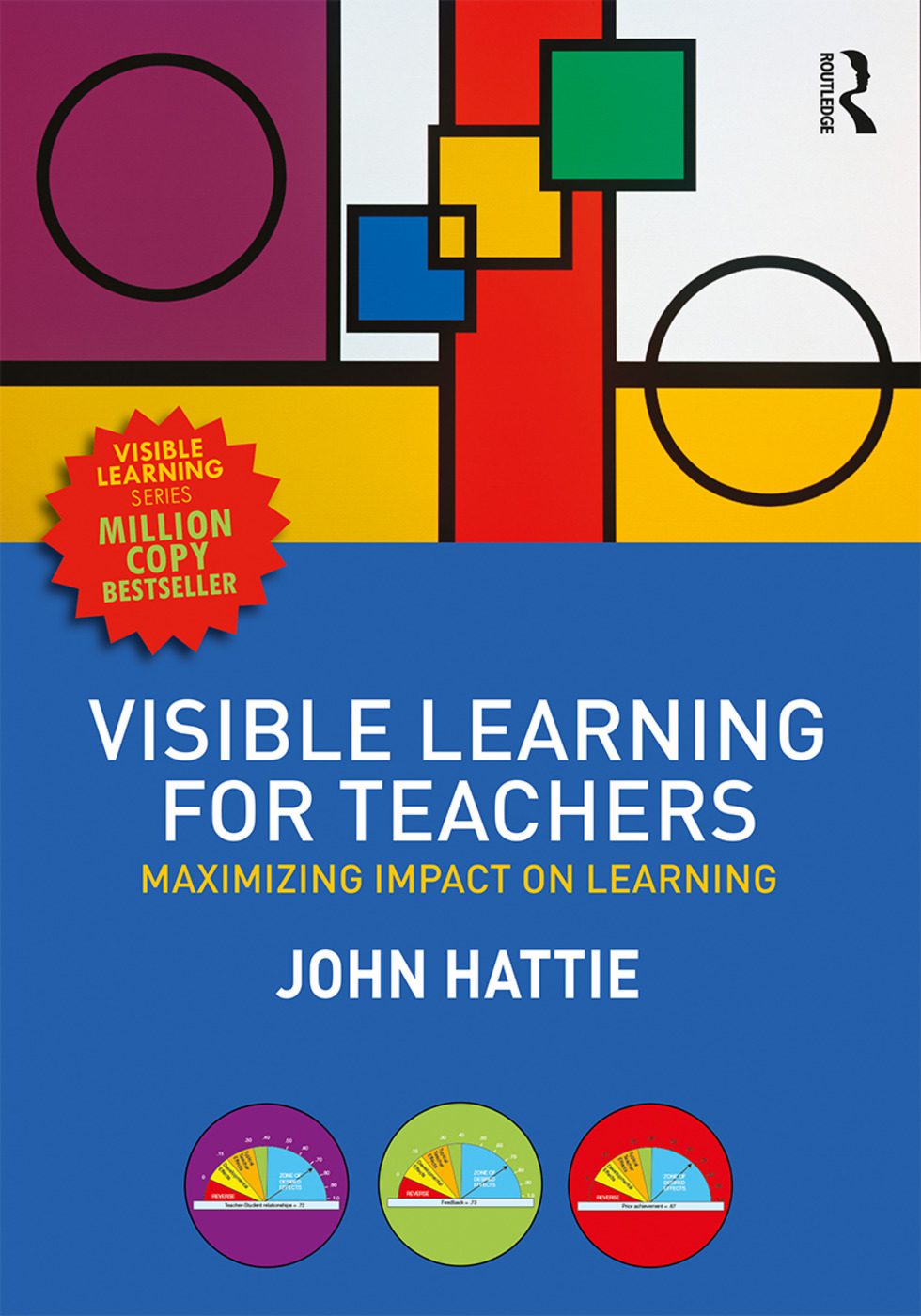
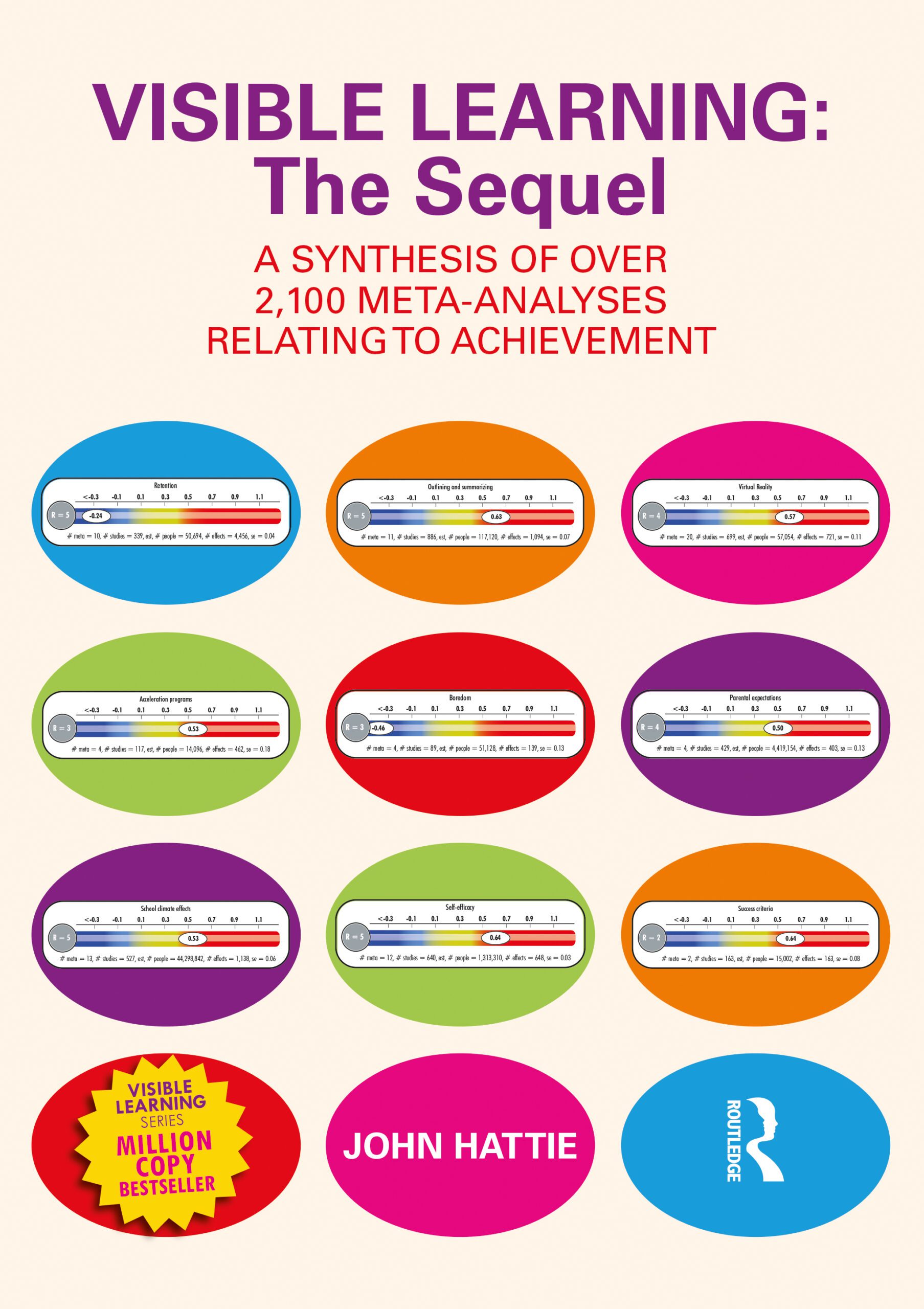
John Hattie’s evidence-based books, published by Routledge, are among the most respected educational resources available today. The books are based on over three decades of empirical education research, synthesizing findings from hundreds of meta-analyses.
His best-selling book, “Visible Learning for Teachers” presents the biggest-ever research project on teaching strategies to practical classroom implementation completed to date, as well as numerous meta-analyses that bring together the findings from over 900 studies. This book was described by the Founder of the Leadership and Learning Center in the USA, Douglas Reeves as “the most important contribution to educational research and practice in decades”. Since then, John has partnered with other experts to explain how Visible Learning can best be applied in the classroom and how it can shape learning in other environments. They represent an amazing journey, but there is still much to do and more books in the pipeline!
His newest book, which is available on Routledge.com, is titled “Visible Learning: The Sequel” and is informed by more than 2,100 meta-analyses drawn from more than 130,000 studies conducted with the participation of over 400 million students, to provide valuable educator insights and improve educational outcomes for learners of any age, in any classroom, anywhere in the world.
In this sequel, Hattie reflects on the implementation of visible learning in schools, the impact of visible learning on teacher and student well-being, and the effects of visible learning on academic outcomes. In addition, he explains how his findings have been understood — and sometimes misunderstood — as well as what educators can look forward to in terms of the future of visible learning.
This book is great for researchers, teachers, students, school leaders, teacher trainers, policy-makers and anyone else interested in the field of education and what makes learning work. As John Hattie put it, “The central message has not changed and is simple — how teachers, leaders, parents, and students think matters most. Their mind frames, ways of thinking, interpreting and evaluating are core to the success of teaching.”
What is a Meta-Analysis?
In the educational sciences, a meta-analysis is a statistical analysis that combines the results of multiple studies in order to answer a research question. The result is a larger sample size, which often provides more precise estimates than could be obtained from any single study. Meta-analyses are most frequently used when there are many studies on the same topic, with each having found different results.
For example, there may be 15 different studies on how effective visible learning is at improving student achievement — all of which have reached different conclusions. In this case, a meta-analysis would be used to determine which of the 15 studies’ results were most accurate and how impactful visible learning is overall.
Analyzing the breadth of educational data and sorting through it to pinpoint important messages is what makes the Visible Learning books so valuable. It’s evidence-based educational research that has been proven to work by data gathered over decades, from tens of thousands of classrooms.
Additional Resources from Routledge
To learn more about visible learning and enhance teaching instruction, check out our John Hattie books and download our free visible learning guide. Moreover, our curated selection of education and teaching books also offers a wealth of insight into the classroom and how to become a better educator.