Making Gameplay Meaningful: A Sneak Peek of a New Math Game!
Reading time
Date posted
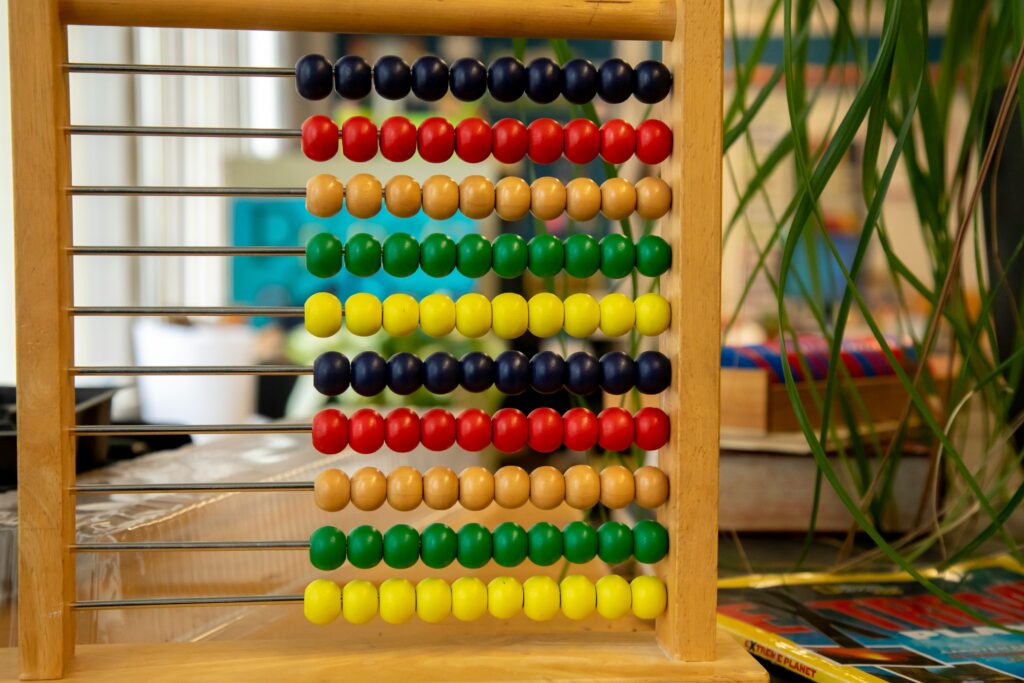
Games and puzzles are a favorite part of math class for many students and teachers. But how can we create game-playing experiences that are mathematically meaningful as well as engaging and collaborative? In the second edition of Well-Played, Grades 3-5, authors Linda Dacey, Karen Gartland, and Jayne Bamford Lynch answer that question and introduce us to a collection of new and updated math games.
Each math game and puzzle in the book includes:
A short explanation of the mathematical ideas the game or puzzle supports.
Variations for each game or puzzle to address a range of learning levels.
Classroom vignettes and tips that model how to introduce the featured game or puzzle.
Exit card choices and student work examples that make real-time assessment a meaningful part of teaching with games and puzzles.
All the materials you need, ready to photocopy and use immediately!
Let’s take a sneak peek at The Between Game, one of the 25 games and puzzles included in Well Played.
The Between Game

Why This Game?
Comparing numbers is an essential component of number sense. We compare numbers on a daily basis. We make number comparisons when deciding what to buy, planning travel time, or considering sports-related statistics. An understanding of place value is necessary for ordering numbers. Students need to appreciate that a 1 in the thousands place has a greater value than a 9 in the hundreds place and that a 1 in the tenths place is greater than a 9 in the hundredths place. Too often, this skill is practised by merely reordering a list of given numbers, hardly an engaging activity.
In this game three players are dealt Digit Cards face down to arrange in the order of their choosing, to make a number. Students may play the game with whole or decimal numbers. The goal is to create a number between the numbers the other two players make. The pace of the game is quick, and students are delighted to discover the results of their efforts when players reveal their numbers.
Math Focus:
Comparing numbers.
Reading numbers.
Writing numbers in standard form.
Determining magnitude of number.
Variations:
Change to Least, Between, Greatest, with each student choosing a different one of these goals. If the goal is met, the player receives a point. Goals rotate with each round.
Include the use of the decimal point with students deciding where to place it prior to the start of the game. For example, if students are using four cards, do they want to place it to create tenths, hundredths or thousandths.
Exit Card Choices:
You get the cards 3, 6, 1, and 9. What number would you choose to create and why?
What strategies did your group use to identify the middle number?
How did you use estimation while playing this game?

Well Played, Grades 3-5: Building Mathematical Thinking Through Number Games and Puzzles
Too often, math games are thought of as just a fun activity or enrichment opportunity. Well Played, Grades 3–5 shows you how to make games an integral part of the math classroom with twenty-five engaging games and puzzles which have all been field tested in diverse classrooms.