Reflecting on John Hattie’s Visible Learning: The Sequel
Reading time
Date posted
Visible learning has proven to be a game-changer in education, creating positive impacts that span classrooms and beyond. From boosting student confidence and motivation to helping teachers refine their craft and empowering school leaders with data-driven insights, its impact is undeniable. By fostering an environment where learning is transparent and collaborative, visible learning not only enhances academic performance but also builds a culture of growth for everyone involved.
What John Hattie’s The Sequel reveals about what really works in education
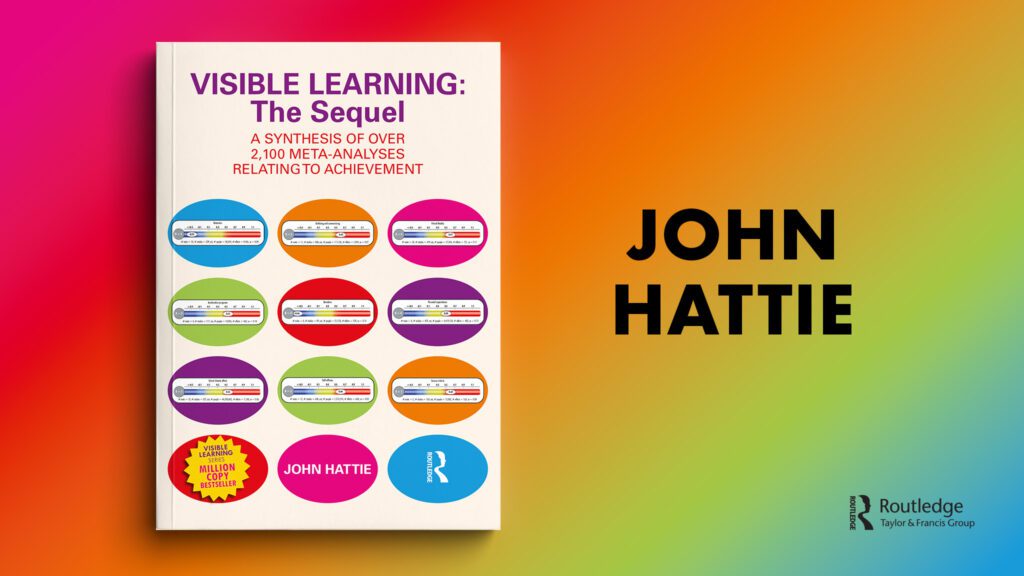
Building on his original Visible Learning research, Hattie analyzes over 2,100 meta-analyses and more than 130,000 studies involving 400 million students worldwide. He redefines how educators understand and apply evidence-based teaching strategies, offering a more nuanced and deeper understanding of what truly influences student achievement.
From data to meaning – Hattie moves away from relying solely on effect sizes and encourages educators to interpret research within the broader context of their classrooms. He advocates for asking deeper questions such as “What works best, for whom, and under what conditions?” to better understand the impact of teaching practices.
Identifying and boosting successful teaching – The focus is shifting from spotting and fixing errors in teaching to identifying what works well and amplifying it. Rather than analyzing only teaching strategies, educators are encouraged to examine their impact on students – on how they think, know, and solve problems, and how they transfer and apply knowledge. The aim is to shift from simply doing and talking to actively listening and understanding how students learn best.
Teachers as evaluators of impact – Teachers are described as those who constantly evaluate the impact of their teaching on student learning. These teachers are not defined by the strategies they use, but by their ability to adapt, reflect, and improve based on evidence. He affirms that impactful teachers collaborate with peers, engage in professional learning, and build strong, trusting relationships with students.
Addressing emerging challenges – This book also identifies new barriers to learning such as boredom, excessive teacher-student dependency, and corporal punishment. Hattie urges educators to create learning environments that are engaging, empowering, and respectful to counter these negative influences.
Our take: teaching is impact, not just instruction
Visible Learning: The Sequel redefines what it means to be an effective teacher. Hattie positions teachers as evaluators of their own impact – professionals who use evidence thoughtfully and adaptively, embracing evidence-informed practice not as a rigid method but as a flexible guide. His work challenges educators to move beyond “what works” to asking “what works best”, always keeping the student at the centre to maximize growth. This approach calls for teachers to collaborate, reflect, identify, and evaluate their practice together to close gaps in expertise and enhance effective teaching at scale; a vision shaped by the belief that “My job here is to evaluate my impact” – John Hattie, 10 Mindframes for Visible Learning.
John Hattie gives us an overview of Visible Learning: The Sequel
Additional resources from Routledge
Request our free guide to start your visible learning today.
Read our blog post A Guide to Visible Learning and Resources to learn more about other Visible Learning resources from John Hattie.
Learn more about John Hattie’s works.
Explore our curated selection of education and teaching books for more insights about how to become a better educator.
